
Hidden Water Damage Signs in Little Rock Homes
September 18, 2026 • Service Restoration
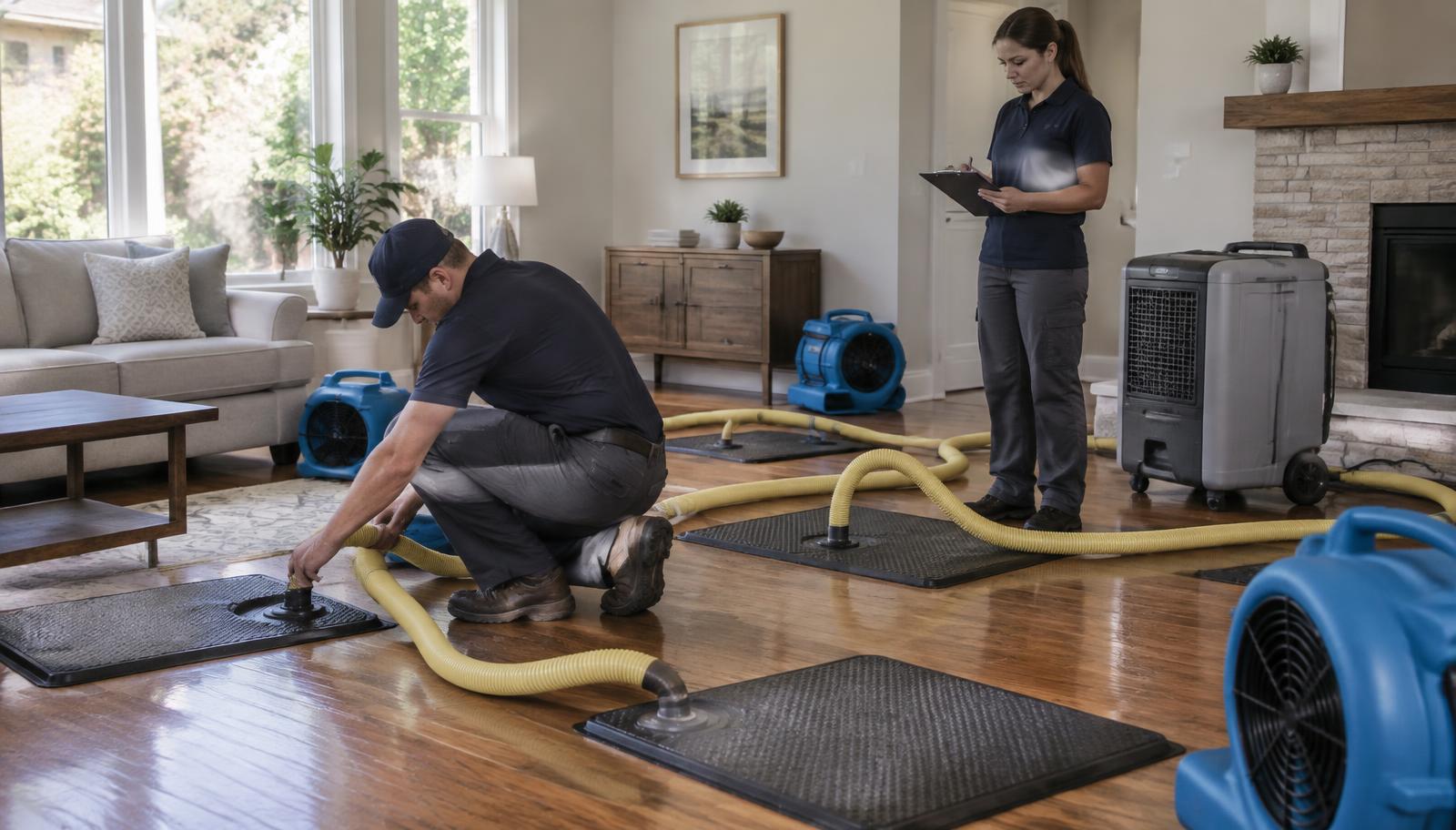
After a burst pipe, appliance leak, or storm intrusion, the visible puddle is only part of the problem. Water can travel beneath hardwood, into subflooring, behind baseboards, and upward through drywall. A room may look dry while trapped moisture continues affecting materials out of sight.
Service Restoration provides 24/7 water damage restoration in Little Rock and surrounding central Arkansas communities. Our IICRC-certified technicians use extraction equipment, moisture mapping, structural drying, dehumidification, and documented readings to address both visible water and moisture hidden inside the structure.
Where Water Commonly Hides
Water follows seams, low points, and porous materials. After the source is stopped, moisture may remain in areas that are difficult to inspect without professional tools:
- Beneath hardwood, laminate, tile underlayment, and carpet padding.
- Inside drywall, insulation, wall cavities, and behind baseboards.
- Within subfloors, floor joists, crawlspaces, and basement materials.
- Around cabinets, plumbing penetrations, water heaters, and appliances.
- Near ceiling openings and roof leaks where water may travel before staining appears.
Warning Signs After the Standing Water Is Gone
Watch for changes that may point to moisture below the surface. Wood flooring can cup, crown, buckle, or develop gaps. Paint may bubble, drywall may feel soft, trim can swell, and musty odors may linger. A sudden increase in indoor humidity or a stain that continues growing also deserves attention.
Do not rely on touch alone to decide whether a structure is dry. Surface materials can feel normal while the layers beneath them still contain moisture.
How Professional Drying Finds and Removes Hidden Moisture
1. Moisture Mapping
Technicians use moisture meters and thermal imaging to identify affected materials and establish a drying plan. Initial readings create a baseline that can be compared with later visits.
2. Water Extraction
Standing water is removed before drying equipment is installed. Our water damage restoration services include emergency extraction for burst pipes, plumbing leaks, basement flooding, crawlspaces, and storm-related losses.
3. Targeted Structural Drying
Air movers and dehumidifiers reduce moisture in the air and affected materials. Specialty floor-drying systems may be used when moisture is trapped beneath hardwood or other finished surfaces. Equipment placement and operating time depend on the materials, room conditions, and documented readings.
4. Monitoring and Documentation
Daily or scheduled moisture readings help confirm whether drying is progressing. Photos, readings, and drying logs may also support communication with an insurance adjuster. We provide direct insurance billing, while coverage depends on the policy and cause of loss.
When the Water Source Changes the Cleanup Plan
A clean supply-line leak is handled differently from sewage or other contaminated water. If a toilet overflow or sewer backup is involved, keep people and pets away from the area and review our sewage cleanup service for information about extraction, sanitization, and contaminated-material handling.
Address Moisture Before Mold Becomes a Larger Concern
Persistent dampness can create conditions where mold may develop. If visible growth or a musty odor is present, avoid disturbing the area. We also offer mold remediation in Little Rock when a water loss has led to a verified mold concern.
Request Water Damage Help in Little Rock
Service Restoration • Little Rock, Arkansas • (972) 943-4162
24/7 Emergency Response